
blue typewriter with a lined notebook next to it

Welcome to my Website

Category: Learning Journal

  • Volunteering for Non-profit

    Volunteering for Non-profit

    My unexpected path to helping out a Little League as a Developer

    From the Bleachers to the Boardroom

    My journey with Little League began unexpectedly when my son first stepped onto the diamond. What started as a way to support his new hobby quickly evolved into a leadership role as a Board Member and Platform Specialist. Recognizing that our league’s administrative backbone needed to match the energy of the players on the field, I stepped in to overhaul our internal operations. I saw an opportunity to trade outdated, manual processes for a modern tech stack, ensuring that the league’s focus remained on the kids rather than the paperwork.

    Modernizing the Game: The Digital Transformation

    As Platform Specialist, I spearheaded a comprehensive digital migration to streamline our day-to-day operations. By leveraging our non-profit status, I secured Google Workspace to centralize our collaboration and implemented Slack to bridge the communication gap between board members and volunteers. To solve the perennial headache of physical paperwork, I integrated DocuSeal for secure, digital document handling. On the technical side, I moved our codebase to GitHub, bringing a level of version control and transparency to our digital assets that the league had never seen before.

    Building a Sustainable Legacy

    Beyond the initial implementation, my focus has been on the long-term sustainability of the organization. I am currently developing a comprehensive set of Standard Operating Procedures (SOPs) to ensure that future board members can step into their roles with clarity and confidence. By documenting these workflows and modernizing our infrastructure, I haven’t just updated our software; I’ve built a scalable foundation that allows the league to grow. My goal has been to leave the organization more efficient, more professional, and better equipped to serve our community for seasons to come.


  • My tech journey

    My tech journey

    My non-linear path

    My professional journey didn’t begin in tech—it began in healthcare. As a Certified Occupational Therapy Assistant (COTA), I worked closely with patients to help them regain independence and improve their quality of life. That experience shaped my work ethic, empathy, and communication skills. I learned how to break down complex tasks into manageable steps, collaborate with interdisciplinary teams, and stay patient through challenging situations. Although it wasn’t a technical role, it built the soft skills that I still rely on today as a developer.

    Over time, I became increasingly curious about technology and problem-solving in a different context. That curiosity led me to join 100Devs, a community-driven software engineering program focused on full-stack development and career transition. Through 100Devs, I immersed myself in HTML, CSS, JavaScript, backend development, and networking. More importantly, I learned how to think like a developer—how to debug, how to read documentation, and how to approach challenges methodically. The program gave me both technical foundations and the confidence to pursue opportunities in tech.

    After completing the program and continuing to build projects, I landed my first role in the industry. Transitioning into tech was both exciting and intimidating. I had to adapt quickly to new tools, workflows, and expectations, but my background in healthcare helped me remain adaptable and team-oriented. I focused on learning as much as possible, asking thoughtful questions, and becoming increasingly independent in my responsibilities. Getting that first job validated the risk I took in changing careers.

    Unfortunately, like many others in the industry, I eventually experienced a layoff. While it was a difficult moment, it also gave me space to reflect on my direction and growth. Instead of viewing it as a setback, I chose to treat it as a pivot point—an opportunity to reassess my goals, strengthen my skills, and refine the type of work I want to pursue. I began revisiting projects, upskilling, and exploring areas like CMS development more intentionally.

    During this transition period, I’ve been contributing my skills to support a local nonprofit little league organization. Helping them with their web presence and digital needs has allowed me to combine technical ability with community impact—something that has always been important to me. It’s reminded me that technology isn’t just about code; it’s about serving people and making systems easier to use and maintain.

    Looking back, my journey from healthcare to tech hasn’t been linear—but it has been intentional. Each stage, from COTA to 100Devs, from landing my first job to navigating a layoff, has strengthened my resilience and adaptability. Now, as I continue building and refining my skills, I’m focused on creating meaningful digital solutions while staying grounded in the people-first mindset that started my career.

  • Bookstache 2.0

    Bookstache 2.0

    Changing directions from CRUD app to using CMS

    When I first built Bookstache, it was designed as a traditional CRUD application to demonstrate my understanding of full-stack fundamentals. The project allowed users to create, read, update, and delete book entries, and it followed an MVC architecture. Building it that way helped me strengthen my skills in routing, database management, templating, and structuring an application from the ground up. It served as a solid technical foundation and represented an important milestone in my development journey.

    As I’ve grown in my career interests, I’ve started focusing more on content management systems and how businesses manage structured content at scale. While the original CRUD version of Bookstache functioned well, it required direct handling of application logic for every content change. That approach works for learning core concepts, but it doesn’t fully reflect how many modern organizations manage dynamic content workflows. I realized that revamping Bookstache into a CMS-driven project would better align with real-world practices.

    By transitioning Bookstache to a CMS model, I’m shifting from simply managing database operations to designing structured, reusable content systems. Instead of hardcoding views and tightly coupling logic to templates, I can leverage content types, taxonomies, and customizable templates. This makes the platform more scalable, easier to update, and closer to how editorial teams, marketers, or non-technical users interact with web platforms.

    This revamp is also a strategic step in my professional development. As I pursue CMS-focused roles, I want my portfolio projects to reflect the direction I’m heading—not just where I started. Transforming Bookstache demonstrates that I understand both traditional application architecture and modern content management workflows. It shows growth, adaptability, and a deeper understanding of how to build maintainable, scalable web solutions.

    Ultimately, updating Bookstache isn’t about replacing the original version—it’s about evolving it. The CRUD build helped me master fundamentals, and the CMS rebuild highlights my ability to apply those fundamentals in a more practical, scalable context. It represents both where I began and where I’m headed as a developer.

  • Revamping my website

    Revamping my website

    Why I rebuilt my portfolio using a CMS

    I originally built my personal website as a static site using HTML and CSS to strengthen my front-end foundations. Creating everything from scratch helped me better understand layout structure, responsive design, and how content is rendered in the browser. It was an important step in my development journey because it forced me to think carefully about clean code, organization, and user experience without relying on frameworks or external tools.

    As I continued growing, I realized that maintaining a static website wasn’t the most efficient way to manage evolving content. Every time I wanted to update a project, adjust copy, or add a new section, I had to manually edit the code and redeploy the site. While that process reinforced technical discipline, it wasn’t scalable for long-term content management—especially if I want to regularly publish blog posts, case studies, or portfolio updates.

    Transitioning to a WordPress CMS allows me to separate content from presentation. Instead of hard-coding each page, I can now create structured posts, organize them with categories, and build reusable templates. This approach reflects how many real-world businesses manage their websites—through dynamic content systems that empower easier updates and long-term flexibility.

    Rebuilding my portfolio with WordPress also aligns with my career goals. As someone interested in CMS-focused development roles, it’s important for me to demonstrate not only front-end fundamentals but also experience working within a content management system. This transition shows that I understand both the technical foundation of web development and the practical workflows that teams use to manage, scale, and maintain content-driven websites.

    Ultimately, this shift isn’t about replacing my static site, it’s about evolving it. By converting my website into a CMS-driven platform, I’m building something that is more sustainable, professional, and aligned with the direction I want my development career to grow.

  • About me

    About me

    Hi there! My name is Yolanda and I made a career tranisition from COTA (certified occupational therapy assistant) to FULL STACK Software Engineer! My current stack MERN (MongoDB, Express, React, Node) stack.

    Most of my life I have been tinkering with tech through playing with different linux OS, being curious about what a computer BIOS is, and learning how to code. After being in the healthcare field for 5+ years, I wanted to make a bigger impact helping people and also give more respresentation for females and POC in the tech field.

    In the past I was told that you had to be a genius to make it as a Software Engineer and that steered me away from it. But now that I’ve made it, I want to empower people that you don’t have to be a genius, that consistency and hard work matters more than being ‘smart’. I would love to combine my two passions, as a therapist and a developer, and use tech to help those in need.

    June 20, 2010

    Competed teaching English in Japan

    After 2 years teaching English in Japan, I cam back to San Diego.

    June 20, 2010
    May 14, 2015

    Graduated as a Certified Occupational Therapy Assistant

    Decided to make a career into healthcare as a COTA

    May 14, 2015
    December 15, 2015

    COTA for school district

    Moved to Arizona and worked a various schools helping kids from K-12th grade

    December 15, 2015
    June 15, 2017

    Came back to San Diego

    Missed home and came back to San Diego and continue to work as a COTA

    June 15, 2017
    October 1, 2019

    Career Change due to COVID

    Lost my hours and decided to dive into tech (my original passion) and decided to self taught and joined a remote bootcamp called 100Devs

    October 1, 2019
    November 20, 2021

    First Job as a Developer

    After a year of self learning and trying new things, got my first job as a developer

    November 20, 2021
    August 24, 2025

    Laid off and staring a new Journey

    Got laid off due to structure changes within the org. Starting on another new journey…..

    August 24, 2025

  • Collab Lab

    Collab Lab

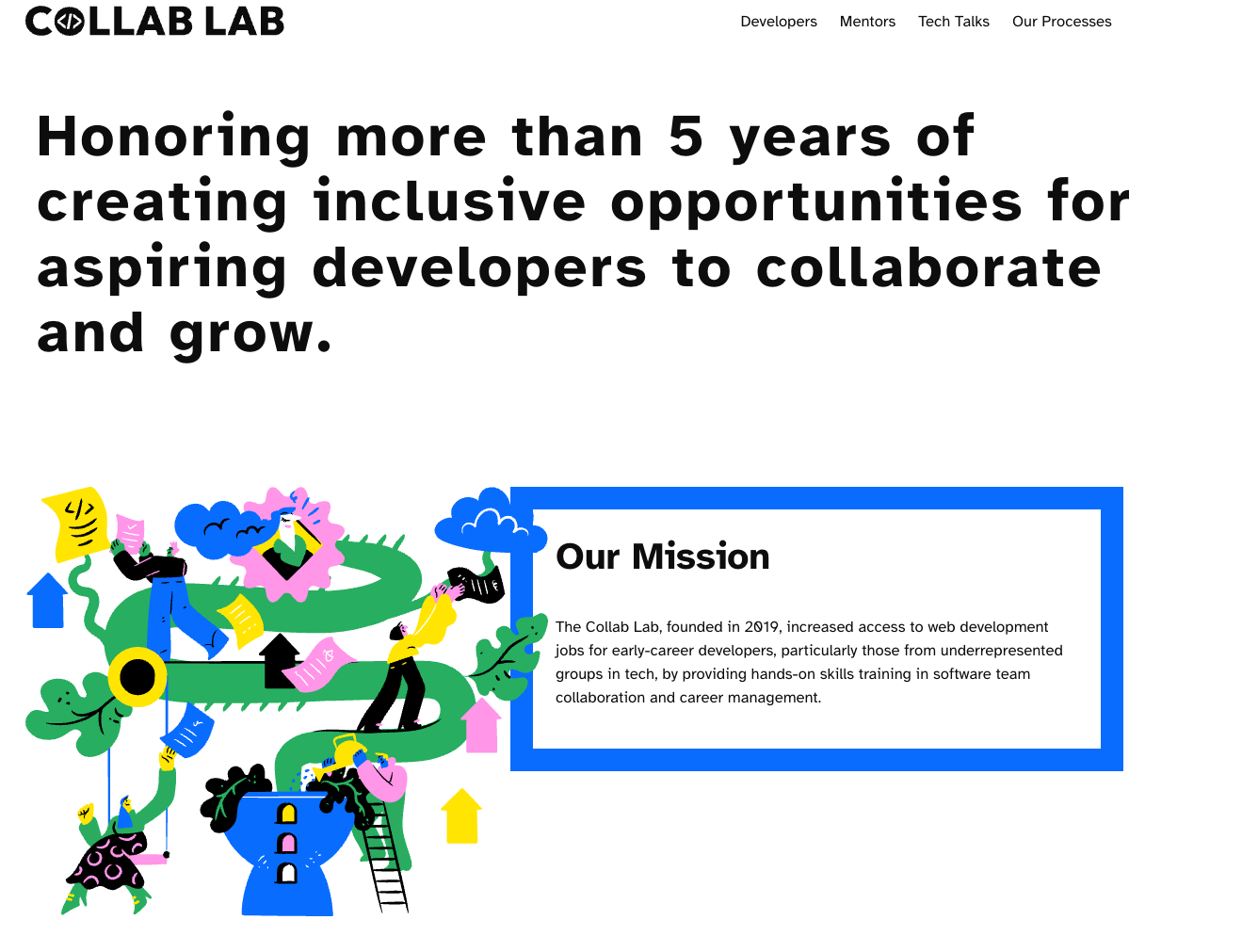
    The Collab Lab is a remote-first, volunteer-driven program designed to help early-career developers gain real-world experience by working on production-level applications in small teams. Founded by The Collab Lab, the program matches participants—known as “Collabies”—into groups of four and guides them through a structured, sprint-based development process. Each team is supported by experienced volunteer mentors who provide technical guidance, facilitate collaboration, and model professional software development practices. The focus isn’t just on building an app—it’s on learning how to work effectively on a distributed engineering team.

    One of the most impactful aspects of Collab Lab is the emphasis on collaboration over individual coding. Participants practice agile workflows, run stand-ups, plan sprint work, and use GitHub for issues, pull requests, and code reviews. Many Collabies share that this experience is their first time contributing to a shared codebase with structured peer review, which builds both technical confidence and communication skills. Beyond writing code, developers learn how to navigate merge conflicts, give and receive constructive feedback, scope features realistically, and support teammates through blockers. The result is not only a finished project, but a deeper understanding of team dynamics in software development.

    As a Collabie myself, I experienced firsthand how transformative the program can be. Working closely with three other developers, I learned how to articulate my thought process, advocate for ideas, and compromise when needed. I gained confidence in pushing code, reviewing others’ work, and contributing to architectural decisions. More importantly, I developed a sense of belonging in tech—being part of a team that was learning and growing together made the journey feel less isolating and more empowering.

    After completing the program, I transitioned into a mentor role to support new incoming Collabies. Stepping into mentorship allowed me to give back to a community that had played a meaningful role in my growth. As a mentor, I guided teams through sprint planning, encouraged inclusive collaboration, and helped troubleshoot technical challenges without taking ownership away from the developers. This shift deepened my leadership skills and reinforced my belief that strong engineering teams are built not only on technical ability, but on empathy, communication, and shared accountability.